1
/
of
3
Copper - 90 tablets
Copper - 90 tablets
NP-3430
Out of stock
Regular price
Sale price
Regular price
Unit price
/
per
Shipping calculated at checkout.
Couldn't load pickup availability
Sorry, it's out of stock.
But we can let you know when it's back in.
Ingredients
| 1 serving contains: | % RI* | |
|---|---|---|
|
|
% RI: |
|
|
|
✝ |
Other ingredients:
*RI = recommended daily intake, ✝ = RI not specified
Verifications
Verifications
Vegetarian
Sugar-free
Vegan
Iodine Free
Iron-free
Dosage
Dosage
1 tablet daily
Allergens
Allergens
Contains: Soy
Description
What is copper?
Copper is a trace element that is vital for the body and performs numerous functions. It is part of numerous enzymes, 16 of which are known so far. One example is superoxide dismutase (SOD), which, among other things, protects cell membranes from damage caused by free radicals and is therefore an important antioxidant. Copper contributes to electron transport and thus to energy production. It strengthens the immune system and is involved in wound healing. In addition, copper is needed for iron absorption and is important for the quality of connective tissue. Furthermore, copper ensures the pigmentation of the skin and hair. Copper also plays an important role in the nervous system.
The stock in the body is about 70 to 150 milligrams. Copper is mainly stored in the skeleton, a smaller amount is found in the internal organs, muscles and brain. It is absorbed through the gastrointestinal tract. The liver regulates the concentration of copper and excessive intakes are excreted.
Copper in our food
Copper is mainly found in offal, fish, shellfish, nuts and cocoa, and some green vegetables. Some spices, such as basil, marjoram, nutmeg and pepper, also contain relatively high amounts of copper. On the other hand, meat, milk and dairy products, tubers and root vegetables as well as sugar, baked goods and pasta are low in copper. At most, up to 50 percent of the ingested copper is processed in the body, but usually less.
Copper as a supplement
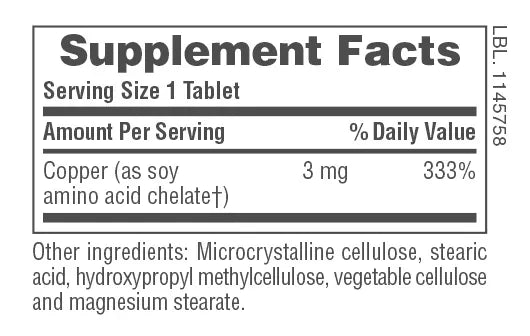
The NaturesPlus product contains 3 mg of elemental, organically bound copper per tablet. One pack provides 90 tablets.
Hint:
Food supplements are not intended to be a substitute for a balanced and varied diet.
Copper is a trace element that is vital for the body and performs numerous functions. It is part of numerous enzymes, 16 of which are known so far. One example is superoxide dismutase (SOD), which, among other things, protects cell membranes from damage caused by free radicals and is therefore an important antioxidant. Copper contributes to electron transport and thus to energy production. It strengthens the immune system and is involved in wound healing. In addition, copper is needed for iron absorption and is important for the quality of connective tissue. Furthermore, copper ensures the pigmentation of the skin and hair. Copper also plays an important role in the nervous system.
The stock in the body is about 70 to 150 milligrams. Copper is mainly stored in the skeleton, a smaller amount is found in the internal organs, muscles and brain. It is absorbed through the gastrointestinal tract. The liver regulates the concentration of copper and excessive intakes are excreted.
Copper in our food
Copper is mainly found in offal, fish, shellfish, nuts and cocoa, and some green vegetables. Some spices, such as basil, marjoram, nutmeg and pepper, also contain relatively high amounts of copper. On the other hand, meat, milk and dairy products, tubers and root vegetables as well as sugar, baked goods and pasta are low in copper. At most, up to 50 percent of the ingested copper is processed in the body, but usually less.
Copper as a supplement
The NaturesPlus product contains 3 mg of elemental, organically bound copper per tablet. One pack provides 90 tablets.
Hint:
Food supplements are not intended to be a substitute for a balanced and varied diet.
Ingredients
| 1 serving contains: | % RI* | |
|---|---|---|
|
|
% RI: |
|
|
|
✝ |
Other ingredients:
*RI = recommended daily intake, ✝ = RI not specified