1
/
of
2
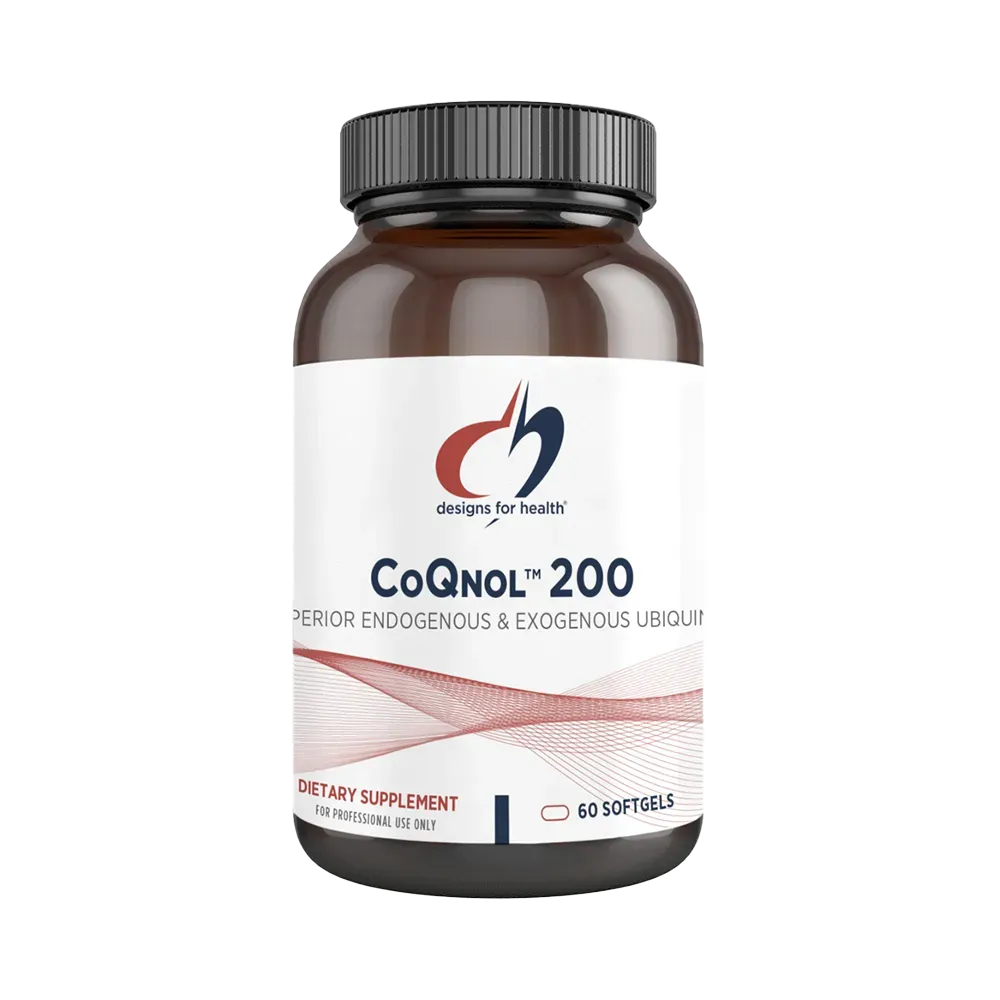
CoQnol™ 200 - 60 softgels
DfH-COQ200-200560
Out of stock
Regular price
Sale price
Regular price
Unit price
/
per
Shipping calculated at checkout.
Couldn't load pickup availability
Sorry, it's out of stock.
But we can let you know when it's back in.
Ingredients
| 1 serving contains: | % RI* |
|---|
Other ingredients:
*RI = recommended daily intake, ✝ = RI not specified
Verifications
Verifications
Soy-free
Dosage
Dosage
Take 1 softgel per day with a meal or as directed by your health-care practitioner.
Allergens
Allergens
No known allergens.
Warnings
Warnings
This product is a dietary supplement. The specified recommended daily intake must not be exceeded. No substitute for a balanced and varied diet and a healthy lifestyle. Keep out of reach of children.
Storage
Storage
Store at room temperature.
Description
CoQnol™ 100 and CoQnol™ 200 features a unique combination of ubiquinol, also known as coenzyme Q10 (CoQ10), and geranylgeraniol (GG) to support mitochondrial and cellular health.* GG complements the actions of ubiquinol by operating as an upstream metabolite that helps stimulate the production of CoQ10 naturally by the body.* Each softgel serving provides ubiquinol as DuoQuinol™, an innovative patent-pending form of this molecule, and GG-Gold™, a patented form of GG extracted from annatto seeds, along with quillaja extract for superior absorption and bioavailability. Quillaja is an extract from the bark of the Quillaja saponaria tree, commonly used as an emulsifier in foods. This proprietary blend creates a stable solution that prevents crystallization and oxidation of ubiquinol.
Ubiquinone derives its name from the word “ubiquitous” because it is present everywhere in the human body. It is especially important for generating energy (adenosine triphosphate) in the mitochondria, which are the tiny “energy factories” inside most cells. For this reason, organs and tissues with high energy demands (such as the heart and liver) have the highest concentrations of CoQ10. In addition, CoQ10 is one of the body’s most critical antioxidants, helping to protect mitochondrial membranes from free radical damage and helping to recycle other antioxidants (such as vitamins C and E). GG occurs naturally in annatto, flaxseed, sunflower and olive oils, and certain medicinal herbs. GG is crucial for synthesizing CoQ10, constructing cell membranes, producing energy in the mitochondria, and stimulating the production of hormones and proper calcium trafficking into the bones.* GG shines in facilitating maintenance of muscle mass and bone tissue during aging.* GG is needed for protein synthesis and modification, helping to build proteins and efficiently perform their functions. GG is also required to convert vitamin K1 into the K2 form.* For those who do not consume much dietary K2 (found in egg yolks, liver, and full-fat dairy products), the human body converts K1 into K2 with the help of GG, and K2 is essential for supporting bone mineralization.
Why Supplement with CoQ10 and GG? CoQ10 occurs naturally in certain foods (especially animal foods such as red meat, poultry, and seafood), but the vast majority is produced inside the body. GG is also produced endogenously, which means inside the body. This internal synthesis may not always be sufficient, particularly in individuals taking pharmaceutical drugs that affect the pathway by which CoQ10 is produced. Synthesis of CoQ10 and GG declines naturally during aging, and the use of certain pharmaceutical drugs (particularly for treating high cholesterol and osteoporosis) inhibits its synthesis, potentially resulting in a need for supplementation.
Ubiquinone derives its name from the word “ubiquitous” because it is present everywhere in the human body. It is especially important for generating energy (adenosine triphosphate) in the mitochondria, which are the tiny “energy factories” inside most cells. For this reason, organs and tissues with high energy demands (such as the heart and liver) have the highest concentrations of CoQ10. In addition, CoQ10 is one of the body’s most critical antioxidants, helping to protect mitochondrial membranes from free radical damage and helping to recycle other antioxidants (such as vitamins C and E). GG occurs naturally in annatto, flaxseed, sunflower and olive oils, and certain medicinal herbs. GG is crucial for synthesizing CoQ10, constructing cell membranes, producing energy in the mitochondria, and stimulating the production of hormones and proper calcium trafficking into the bones.* GG shines in facilitating maintenance of muscle mass and bone tissue during aging.* GG is needed for protein synthesis and modification, helping to build proteins and efficiently perform their functions. GG is also required to convert vitamin K1 into the K2 form.* For those who do not consume much dietary K2 (found in egg yolks, liver, and full-fat dairy products), the human body converts K1 into K2 with the help of GG, and K2 is essential for supporting bone mineralization.
Why Supplement with CoQ10 and GG? CoQ10 occurs naturally in certain foods (especially animal foods such as red meat, poultry, and seafood), but the vast majority is produced inside the body. GG is also produced endogenously, which means inside the body. This internal synthesis may not always be sufficient, particularly in individuals taking pharmaceutical drugs that affect the pathway by which CoQ10 is produced. Synthesis of CoQ10 and GG declines naturally during aging, and the use of certain pharmaceutical drugs (particularly for treating high cholesterol and osteoporosis) inhibits its synthesis, potentially resulting in a need for supplementation.
Ingredients
| 1 serving contains: | % RI* |
|---|
Other ingredients:
*RI = recommended daily intake, ✝ = RI not specified