1
/
of
2
Tri-Butyrin Supreme™ - 60 softgels
DfH-TBS060-200574
Out of stock
Regular price
Sale price
Regular price
Unit price
/
per
Shipping calculated at checkout.
Couldn't load pickup availability
Sorry, it's out of stock.
But we can let you know when it's back in.
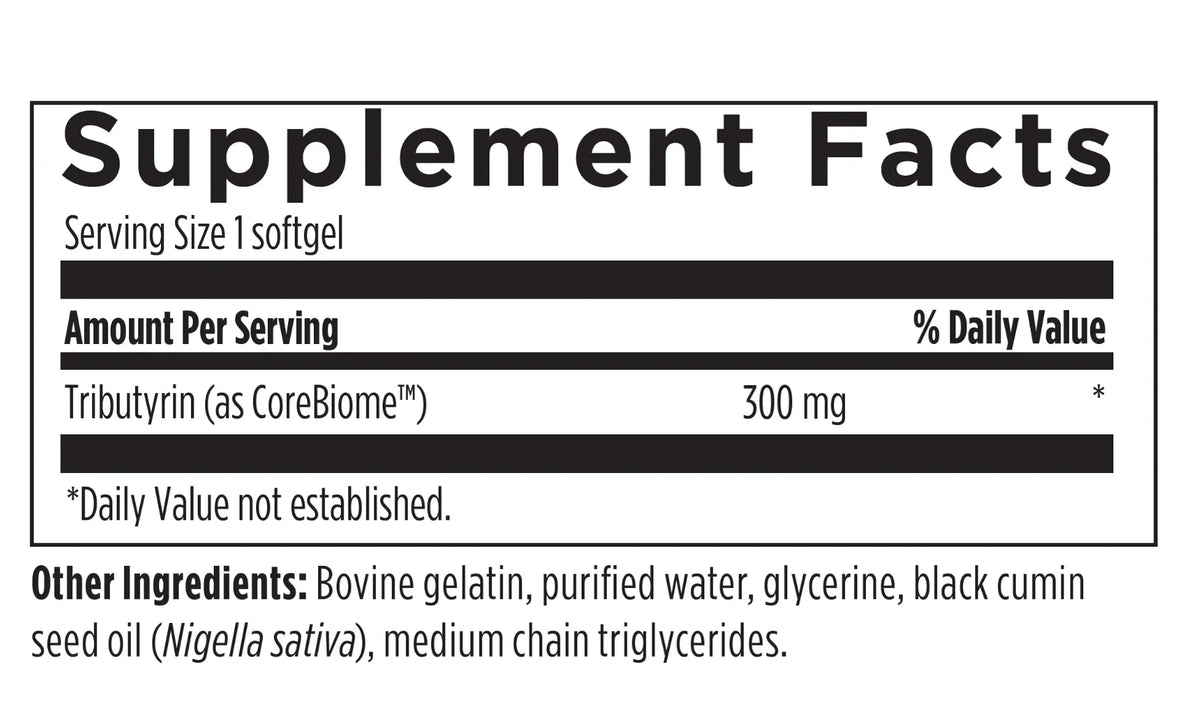
Ingredients
| 1 serving contains: | % RI* |
|---|
Other ingredients:
*RI = recommended daily intake, ✝ = RI not specified
Verifications
Verifications
Soy-free
Dosage
Dosage
Take 1 softgel per day or as directed by your health- care practitioner.
Storage
Storage
Store in a cool, dry place away from direct sunlight and heat
Description
Tri-Butyrin Supreme™ represents a new approach to gut health and immune function by modulating
intestinal flora, promoting colon cell health and supporting the integrity of the gut lining.* This product
features a patent-pending form of a compound called tributyrin, which contains three molecules of
butyrate, a unique kind of fat with potentially beneficial properties (detailed below).
“Postbiotics”—a new frontier in gut health
Contributors to gut health can be divided into three categories: prebiotic, probiotic, and postbiotic.
Prebiotics are fibers the human body cannot digest, for example, the “resistant starch” found in unripe
bananas. Because these fibers are not digested by enzymes in the small intestine, they arrive intact in
the colon, where they serve as food for the beneficial bacteria—the “gut flora”—known as probiotics.
“Postbiotics” is a new term for the compounds produced by these beneficial colonic bacteria as a result of
them breaking down the fibers via fermentation. One of these compounds is butyrate, a special kind of fat
that occurs naturally in dairy fats, like butter and cheese, as well as in some fermented vegetables. While
the butyrate present in foods is primarily metabolized in the stomach and small intestine, the butyrate
in Tri-Butyrin Supreme™ withstands degradation in the upper GI tract and arrives in the colon, where its
effects are targeted.
It is widely recognized that diets high in fiber support overall health and are especially beneficial for
digestive/gut health. The fiber, itself, may be required for some of the noted health effects of fiber-rich
diets, but postbiotic compounds—butyrate, in particular—may be crucial factors for healthy gut function.
In fact, some of the positive aspects of fiber in the diet may actually be driven by the activity of butyrate,
rather than the fiber itself.
Spotlight on butyrate
Butyrate has several interesting properties that make it potentially
helpful for those living with suboptimal gut function. One such
property is that it supports the physical structure of the colon by
helping the cells that make up the intestinal lining adhere together
properly. (You may have heard the term “leaky gut,” which
refers to these cells being farther apart than normal, which may
compromise the integrity of the gut.) The gut is one of the body’s
first lines of defense against harmful compounds, so it is a primary
player in the immune system. By supporting the gut lining, butyrate
contributes to healthy immune function. Additionally, butyrate
helps promote regularity, which may aid those with occasional
constipation. This intriguing compound also supports a healthy
inflammatory response in the gut and serves as the primary fuel
source for colonic cells.*
Recommended Use: Take one softgel per day, or as directed by
your health care practitioner.
intestinal flora, promoting colon cell health and supporting the integrity of the gut lining.* This product
features a patent-pending form of a compound called tributyrin, which contains three molecules of
butyrate, a unique kind of fat with potentially beneficial properties (detailed below).
“Postbiotics”—a new frontier in gut health
Contributors to gut health can be divided into three categories: prebiotic, probiotic, and postbiotic.
Prebiotics are fibers the human body cannot digest, for example, the “resistant starch” found in unripe
bananas. Because these fibers are not digested by enzymes in the small intestine, they arrive intact in
the colon, where they serve as food for the beneficial bacteria—the “gut flora”—known as probiotics.
“Postbiotics” is a new term for the compounds produced by these beneficial colonic bacteria as a result of
them breaking down the fibers via fermentation. One of these compounds is butyrate, a special kind of fat
that occurs naturally in dairy fats, like butter and cheese, as well as in some fermented vegetables. While
the butyrate present in foods is primarily metabolized in the stomach and small intestine, the butyrate
in Tri-Butyrin Supreme™ withstands degradation in the upper GI tract and arrives in the colon, where its
effects are targeted.
It is widely recognized that diets high in fiber support overall health and are especially beneficial for
digestive/gut health. The fiber, itself, may be required for some of the noted health effects of fiber-rich
diets, but postbiotic compounds—butyrate, in particular—may be crucial factors for healthy gut function.
In fact, some of the positive aspects of fiber in the diet may actually be driven by the activity of butyrate,
rather than the fiber itself.
Spotlight on butyrate
Butyrate has several interesting properties that make it potentially
helpful for those living with suboptimal gut function. One such
property is that it supports the physical structure of the colon by
helping the cells that make up the intestinal lining adhere together
properly. (You may have heard the term “leaky gut,” which
refers to these cells being farther apart than normal, which may
compromise the integrity of the gut.) The gut is one of the body’s
first lines of defense against harmful compounds, so it is a primary
player in the immune system. By supporting the gut lining, butyrate
contributes to healthy immune function. Additionally, butyrate
helps promote regularity, which may aid those with occasional
constipation. This intriguing compound also supports a healthy
inflammatory response in the gut and serves as the primary fuel
source for colonic cells.*
Recommended Use: Take one softgel per day, or as directed by
your health care practitioner.
Ingredients
| 1 serving contains: | % RI* |
|---|
Other ingredients:
*RI = recommended daily intake, ✝ = RI not specified